On the first Friday of December, Wambui did what thousands of Kenyan business owners do every week. She opened Instagram on her phone, picked her best post, a close-up of her tan leather sandals on a Diani beach towel, and tapped Boost.
KSh 5,000. Seven days. Nairobi, Mombasa and Kisumu, ages 18 to 45.
By Sunday, her phone would not stop buzzing. 9,000 people had seen the post. 400 likes. Thirty comments: “Price?”, “Do you deliver to Thika?”, a row of heart-eyes. She answered every one.
She sold two pairs.
Then, on Tuesday, an email from Meta: her payment had failed and her ads had stopped. Her bank had blocked the automatic charge on her debit card. When she checked the receipt, the KSh 5,000 boost had cost more than KSh 5,000.
Wambui makes handmade leather sandals in a small workshop near Kariokor Market in Nairobi. She is good at her craft and good with customers. That evening she sat at her workbench, phone in hand, and asked the question that brings a lot of Kenyan sellers to this page: “What should Facebook ads actually cost, and how do I pay without my card failing?”
The short answer
- There is no fixed price. You set a budget and Meta charges as your ads run. In Kenya in 2026, expect roughly KSh 300–800 per 1,000 views, KSh 10–50 per click and KSh 150–800 per lead.
- A sensible start is KSh 300–500 a day for at least two weeks, about KSh 9,000–15,000 a month.
- Meta adds 16% VAT for every advertiser in Kenya.
- You can pay with M-Pesa (on a new ad account set to Kenya and Kenyan shillings), a Visa or Mastercard, or PayPal.
If you sell on WhatsApp, an Ads Manager campaign that sends people to a WhatsApp chat usually beats boosting a post for likes.
How much do Facebook ads cost in Kenya?
Facebook and Instagram ads are not sold at a fixed price, like a billboard. Every time someone opens the app, Meta runs an auction for the ad slots in their feed. You decide how much to spend in total, and Meta tries to get you the best results for that budget. As Meta puts it: “When you advertise on Meta, you decide how much you want to spend.”
That means the useful question is not “how much is an ad?” but “what does each result cost?”
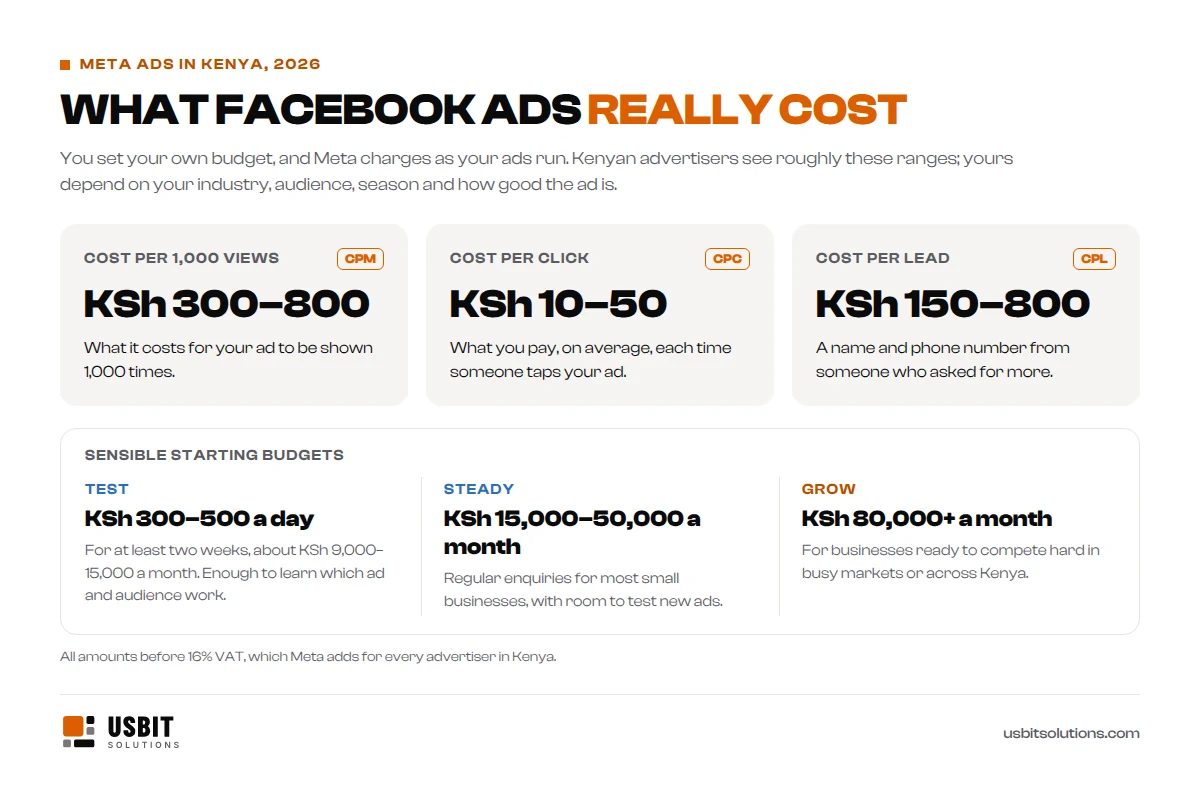
| Measure | What it means | Typical range in Kenya (2026) |
|---|---|---|
| CPM | Cost for your ad to be shown 1,000 times | KSh 300–800 |
| CPC | Cost each time someone taps your ad | KSh 10–50 |
| Cost per lead | Cost for a name and number from an interested person | KSh 150–800 |
Wambui’s boost reached 9,000 people for KSh 5,000, which is about KSh 555 per 1,000. Right in the middle of the range. The ad did exactly what she asked for. The trouble was what she had asked for.
What makes your ads cheaper or more expensive
- Your goal. Likes and views are cheap. Sales and leads cost more per result, but they are worth more.
- Competition. December, Black Friday, back-to-school and election periods are busy, so costs rise.
- Your audience. A tiny, very specific audience usually costs more per person than a broad one.
- The ad itself. Meta rewards ads people stop for and engage with. A clear photo or short video of the product, with the price, often does better than a polished poster.
How much should you spend on Facebook ads?
Meta sets a small minimum daily budget, which it says varies by country, objective and currency. Ads Manager warns you if yours is too low. In practice, a few hundred shillings a day is enough to start learning.
A better way to set a budget is to work backwards from what a customer is worth. Wambui’s sandals sell for KSh 3,500 and leave her about KSh 1,500 after materials and delivery. So she can afford to spend up to about KSh 1,500 in ads to win a sale and still break even, and much less if she wants to make money. If those customers come back, as hers often do, each one is worth even more.
Her plan: KSh 1,000 a day for two weeks. That is KSh 14,000 of ads, plus VAT.
Boost post or Ads Manager?
This was the first thing Wambui’s friend Kevin, who runs ads for a few small brands, asked her. “When you boosted, what goal did you pick?” She had left it on the default: more engagement. Meta had found her 400 people who like liking things.
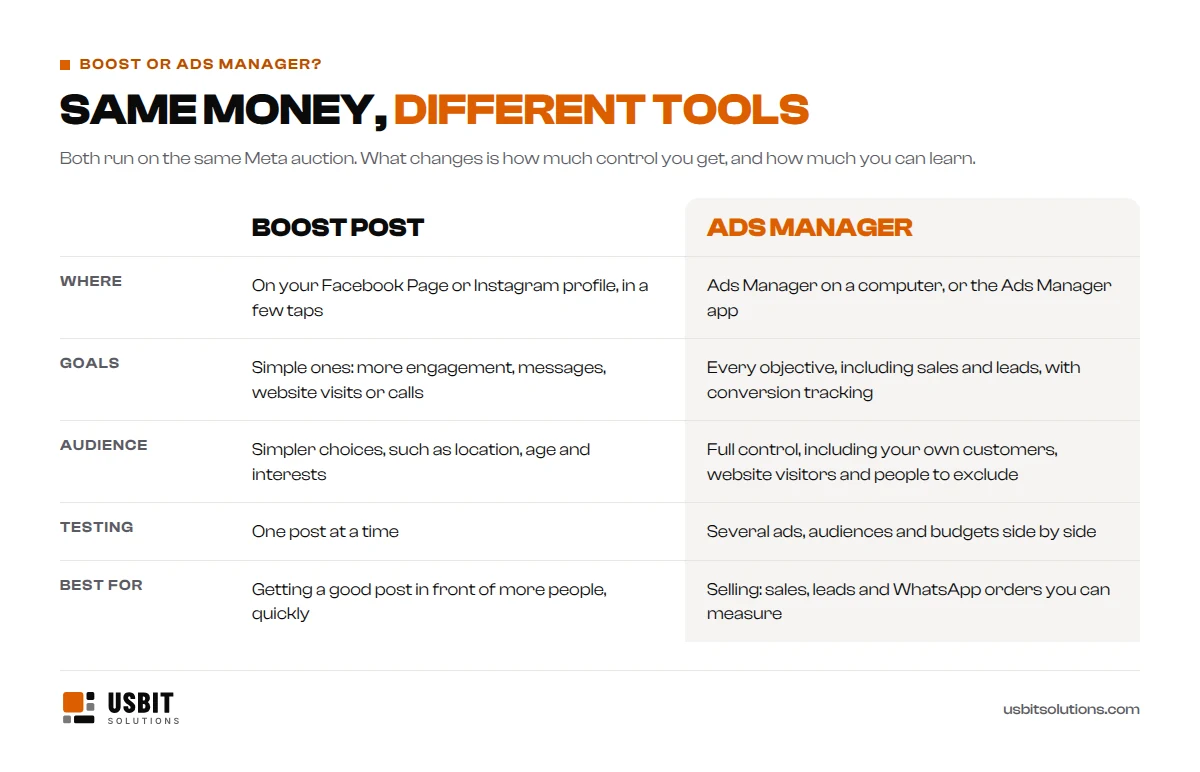
Boosting is not wrong. It is quick, and it is fine for getting a good post in front of more people. But if you want sales, use Ads Manager: choose an objective that matches what you want people to do, such as sales, leads or messages, test two or three different ads side by side, and see which one brings buyers, not just likes.
How to pay for Facebook ads in Kenya
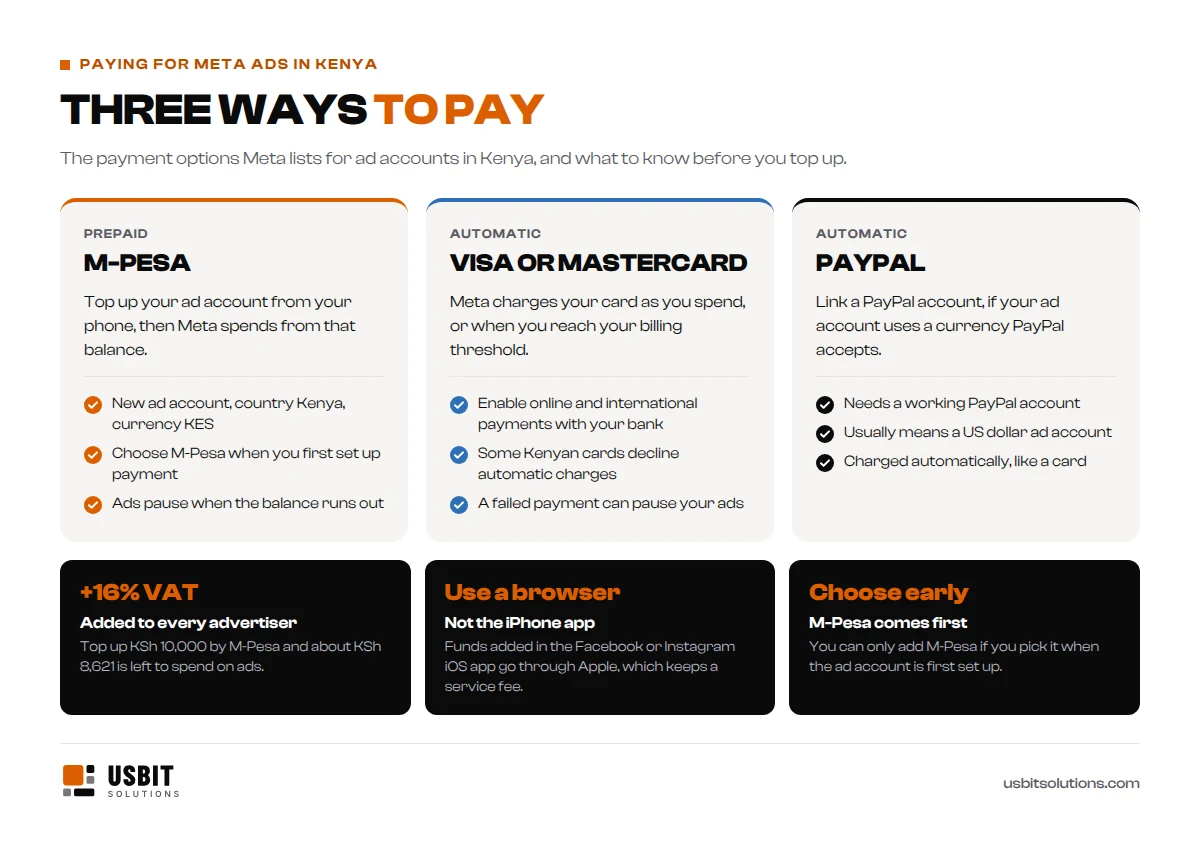
Meta lists three ways to pay for ads from a Kenyan ad account. Each works differently.
1. M-Pesa (prepaid)
According to Meta’s payment options for Kenya, M-Pesa is available as a manual payment method when your ad account’s country is Kenya and its currency is the Kenyan shilling (KES). There is a catch: you can only add a manual payment method if you choose it when you first set up the ad account. So most people create a new ad account for it.
- In Meta Business Suite or Business Settings, create a new ad account.
- Set the country to Kenya, the currency to Kenyan shilling and the time zone to Nairobi.
- When asked how you want to pay, choose M-Pesa.
- Add funds: enter the amount and approve the payment on your phone with your M-Pesa PIN.
- Run your ads. Meta takes what you spend from your balance about once a day, and your ads pause when it runs out.
This is what Wambui did. No more failed payments, and she never spends more than she has topped up.
2. Visa or Mastercard (automatic)
With a card, Meta charges you as you spend, or each time you reach your billing threshold. It is convenient when it works. Some Kenyan cards, though, decline automatic charges from abroad, and a failed payment stops your ads. If you pay by card:
- Ask your bank to enable online and international payments on the card.
- Keep enough money on the account for the next charge.
- Add a second card as a backup in your payment settings.
3. PayPal
Meta also accepts PayPal, in the currencies PayPal supports. For Kenyan advertisers that usually means an ad account in US dollars, so most small businesses find M-Pesa or a card simpler.
The 16% VAT
Since November 2022, Meta adds VAT at Kenya’s 16% rate for every advertiser whose billing country is Kenya, whether you advertise for business or personal reasons. On card accounts, it is added on top of each charge. With M-Pesa, it is taken when you top up, so KSh 10,000 gives you about KSh 8,621 to spend on ads. If you are VAT-registered, add your VAT number in your payment settings so it appears on your receipts.
That was the mystery on Wambui’s receipt.
Do not top up from the iPhone app
Meta says funds added through the Facebook or Instagram iOS apps are charged through the Apple App Store, which keeps a service fee. Add funds and create ads in a web browser, Meta Business Suite or Ads Manager instead, and all your money goes on ads.
Click-to-WhatsApp ads: made for Kenyan sellers
Wambui’s customers do not fill in forms. They send a WhatsApp message, ask about sizes, send a photo of their feet, and pay by M-Pesa. So Kevin set up her campaign in Ads Manager with one goal: start a WhatsApp conversation. Everyone who tapped the ad landed in a chat with her business number, with a ready-made first message: “Hi, I’d like to order the tan sandals.”
For a lot of Kenyan small businesses, this is the shortcut. You do not need a website, and the ad sends people straight to where you already sell. A few things make it work:
- Use the free WhatsApp Business app, with your catalogue, prices and opening hours filled in.
- Reply fast. A chat that waits three hours for an answer is a sale that went elsewhere.
- Use labels such as New, Paid and Delivered, so you can count how many chats became orders.
Meta is also bringing more ad formats to WhatsApp itself in Kenya this year, including ads in Status, as HapaKenya reported.
Mistakes that waste ad money
- Boosting for likes when you want sales.
- Changing the ad every day. Every new ad set goes through what Meta calls a learning phase. Give it about a week before you judge it.
- One ad, one audience. Test at least two or three ads; the winner is rarely the one you expect.
- Slow replies on WhatsApp, Messenger or Instagram DMs.
- Forgetting the VAT when you plan your budget.
- Paying from the iPhone app, and losing part of your budget to Apple’s fee.
- Not counting results. Likes are not sales. Track chats, orders and money in.
Wambui’s December, take two
Two weeks and KSh 14,000 of ads later, plus KSh 2,240 in VAT, Wambui had had 186 WhatsApp conversations. 41 of them became orders, at KSh 3,500 a pair. That is KSh 143,500 in sales, and each new customer cost her about KSh 340 in ads.
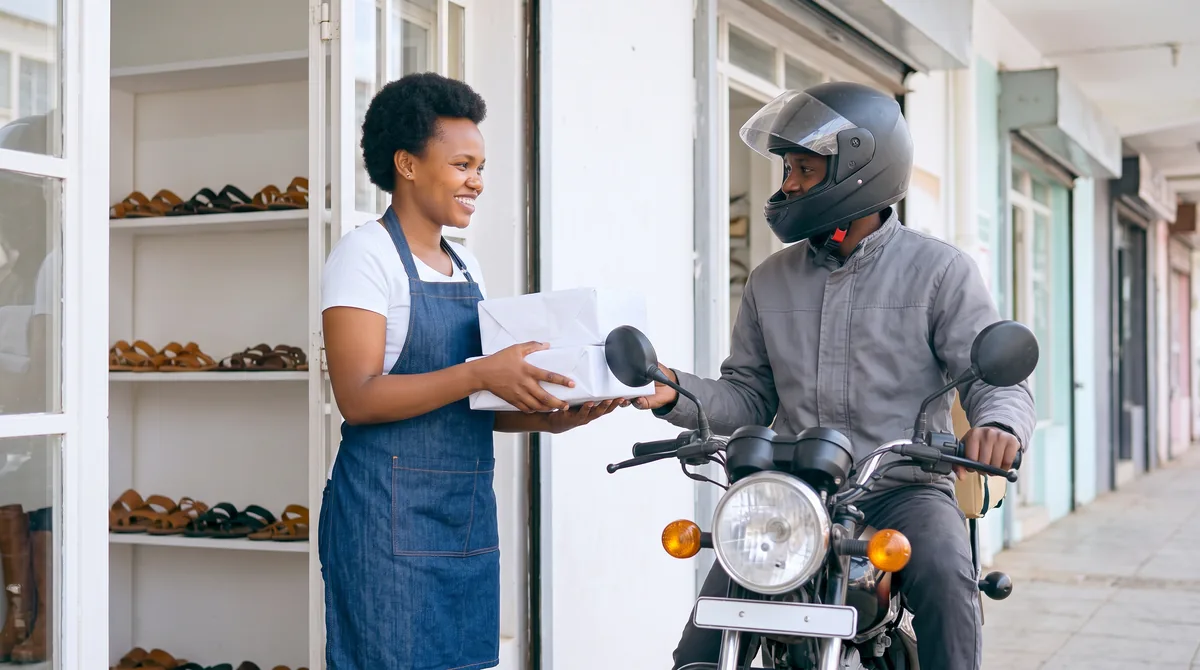
The best ad was not the beach-towel photo. It was a twelve-second video of her stitching a strap, shot on her phone in the workshop. People wanted to see who made them.
She still boosts a post now and then. But now she knows what she is paying for.
Wambui is a composite of the business owners we work with. The prices, payment options and rules in this guide are real; the cost ranges are typical, not guaranteed.
Want help with your ads?
Our digital marketing packages start from KSh 25,000 a month for social media management, and our Enterprise marketing suite includes Google and Facebook ads management. Not sure what to spend? Tell us what you sell and we will suggest a sensible starting budget. You can compare every package on our pricing page.
Sending people to a website? Make sure it can take payment: see how to add M-Pesa to your website. Selling locally? Set up your Google Business Profile too.
Facebook ads in Kenya: FAQs
What is the minimum budget for Facebook ads in Kenya?
Meta sets a small minimum daily budget that varies by country, objective and currency, and Ads Manager warns you if yours is too low. In practice, KSh 300–500 a day for at least two weeks is a sensible test.
Can I pay for Facebook ads with M-Pesa?
Yes. M-Pesa is available when your ad account’s country is Kenya and its currency is the Kenyan shilling, and you choose it when you first set up the ad account. You top up first, and Meta spends from that balance.
Why does Facebook keep declining my card?
Usually because the card is not enabled for online or international payments, there was not enough money at the time of the charge, or the bank blocked an automatic charge. Call your bank, add a backup card, or set up a new Kenyan shilling ad account with M-Pesa.
Do I pay VAT on Facebook ads in Kenya?
Yes. Since November 2022, Meta adds 16% VAT for every advertiser whose billing country is Kenya. VAT-registered businesses can add their VAT number so it appears on their receipts.
Is boosting a post worth it?
For getting a good post seen, yes. For sales, an Ads Manager campaign with a sales, leads or messages goal usually works better, because Meta looks for people likely to do that, not just to like.
How long before Facebook ads start working?
Give a new campaign about a week before you judge it, and avoid big changes during that time. Meta’s system needs some results to learn who responds.
Do I need a website to run Facebook ads?
No. You can send people to WhatsApp, Messenger, Instagram messages, a phone call or a lead form. A website helps when you want to sell online, track purchases and build trust.
Do I need a Facebook Page to advertise?
Yes. Ads run from a Facebook Page, an Instagram account, or both, so set those up properly first, with a clear profile photo, contact details and recent posts.